A Hospitality Waste Reduction Programme That Works

A buffet tray scraped into a mixed bin can undo hours of careful purchasing, menu planning and sustainability reporting. A practical hospitality waste reduction programme gives hotels, restaurants and catering teams a way to act on that moment - separating what can be prevented from what can be processed, measured and put to better use.
For hospitality businesses in Oman and across the Middle East, food waste is not only an environmental issue. It affects disposal costs, back-of-house space, staff time, guest expectations and ESG performance. The strongest programmes do not rely on a poster in the kitchen or a one-off staff briefing. They make better waste decisions part of daily service.
Start with the waste your operation actually produces
A five-star hotel with multiple restaurants, banqueting kitchens and staff dining has very different needs from a neighbourhood café. Before choosing equipment, setting targets or asking teams to change routines, establish where waste is coming from and in what quantities.
Track food waste for at least one representative week, ideally across both busy and quieter periods. Separate preparation waste, spoilage, buffet returns, plate waste and unavoidable organic material such as peelings, bones and coffee grounds. Record the source, approximate weight and reason for disposal. This makes patterns visible: oversized batch cooking, poor stock rotation, unclear buffet replenishment rules or portion sizes that do not reflect what guests actually eat.
Also review non-food materials. Cardboard, glass, plastic packaging, cooking oil and single-use service items may require different collection routes. Keeping these streams separate matters because a bin contaminated with mixed waste is harder and more expensive to recover. The immediate priority, however, is often organics. Food waste is heavy, frequent and environmentally damaging when sent to landfill, where decomposition generates methane.
Prevent food waste before planning how to treat it
On-site processing is a valuable part of a circular approach, but prevention comes first. Every kilogram of edible food saved avoids the purchasing, transport, storage and preparation resources behind it.
Kitchen managers can use waste records to adjust ordering and production. If breakfast pastries are consistently left over, reduce the final bake rather than accepting waste as the cost of abundance. If one conference menu produces high plate waste, revise the portion, garnish or serving format. If a particular ingredient regularly expires, improve stock rotation and review whether it belongs on the menu at that volume.
Hospitality teams should be careful not to confuse generosity with overproduction. Guests value quality, freshness and thoughtful service. A well-managed buffet can still feel plentiful when smaller trays are replenished more frequently. This may add a little labour during peak service, but it can cut both waste and food cost. The right balance depends on guest profile, occupancy, event commitments and the reliability of demand forecasts.
Where safe, legal and operationally suitable, surplus edible food may also be redirected through approved donation arrangements. That route needs clear food-safety controls, reliable partners and prompt handling. It is not a substitute for better forecasting, but it can prevent good food becoming waste.
Build simple separation into every shift
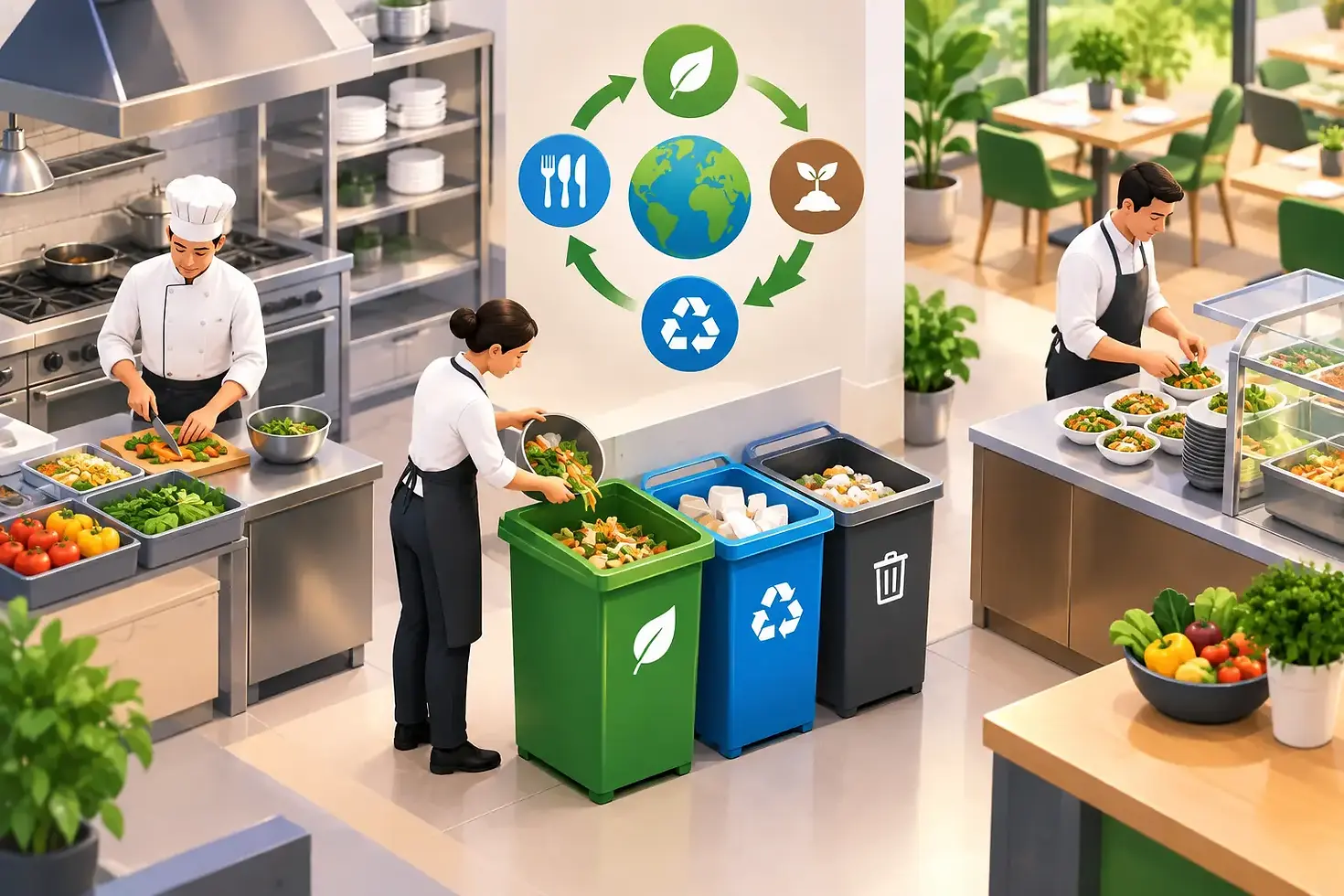
Waste separation succeeds when it is easier to do correctly than incorrectly. Put clearly labelled containers where waste is created: at prep stations, dishwashing areas, staff dining spaces and buffet clearance points. Labels should use plain language and pictures where teams speak different first languages.
A workable set-up distinguishes food waste from recyclables, general waste and items that need specialist handling. It also identifies what cannot go into the food-waste stream. Packaging, cutlery, gloves, cleaning cloths and chemical containers can compromise organic material and create unnecessary problems for the team processing it.
Training should be short, practical and repeated. Show staff the containers, explain why separation matters and nominate a shift lead who can answer questions. The most useful training happens in the working area, not only in a meeting room. New starters, agency staff and temporary event teams need the same instruction, particularly in high-turnover hospitality operations.
Make organics a resource, not a landfill burden
Once preventable waste has been reduced and separation is consistent, a BioDigester can provide a practical route for the unavoidable organic material that remains. It processes food waste on site into a soil-enhancing resource, helping hospitality operators divert organics from landfill and reduce the emissions associated with disposal and decomposition.
The appropriate system depends on daily volumes, available space, access for staff and the type of food being produced. A compact unit may suit a smaller restaurant, school kitchen or café with limited back-of-house room. Larger commercial systems can support hotels, caterers, central kitchens and developments handling recurring high volumes. The aim is not to buy the biggest unit available. It is to specify capacity that matches the real waste profile, including seasonal peaks and event days.
This approach has operational value as well as environmental value. Less food waste waiting in bins can mean fewer odours, cleaner storage areas and less reliance on collections. The output can support soil quality rather than adding to the landfill problem. It does require sensible daily discipline: correct inputs, basic cleaning and a named team responsible for operation. Good support is therefore as important as the equipment itself.
Ecobia ME provides BioDigesters from compact Baby units to commercial and industrial-scale systems, with purchase, rental and rent-to-buy options for organisations that need a manageable route into on-site food-waste processing.
Set targets that staff can see and influence
Targets should be specific enough to guide action but realistic enough to keep teams engaged. A property might aim to reduce avoidable preparation waste, increase the proportion of organics diverted from landfill or lower food waste per occupied room, cover or event guest.
Avoid setting one headline target without defining how it will be measured. A fall in total waste may simply reflect lower occupancy. Comparing food waste against meals served, covers or occupancy creates a more meaningful picture. For banqueting, measure by event type and guest count. For staff canteens, a per-meal figure may be more useful.
Review results monthly with chefs, stewards, facilities teams and sustainability leads. Keep the discussion constructive. The purpose is to identify what changed and what can be improved, not to blame a busy kitchen after a major function. Visible progress also gives procurement and leadership teams credible evidence for ESG reporting, client tenders and internal sustainability commitments.
Give ownership to the people closest to the bins
A hospitality waste reduction programme can lose momentum when it sits only with the sustainability manager. Chefs influence purchasing and production. Stewards influence separation quality. Facilities teams manage collection points and equipment. Procurement teams can challenge unnecessary packaging and work with suppliers on delivery formats.
Create a small cross-functional group with clear responsibilities. One person can own measurement, another can check separation, while kitchen leadership turns findings into menu and production changes. For larger sites, appoint waste champions by outlet or shift. Recognition helps too: sharing a monthly improvement figure with the team makes the outcome feel real.
Guest-facing communication should be used with judgement. Some guests appreciate clear information about how a hotel manages food waste and supports circular practices. Others mainly want a good dining experience. A concise message near a buffet or in sustainability materials can work well, provided the operation behind it is genuine and measurable.
Plan for the realities of hospitality operations
The best system is the one staff can maintain during a full breakfast service, a wedding reception and a late-night clean-down. Test container locations, collection timing and staff responsibilities before rolling out changes across the property. If a bin is too far from the point of use, contamination will rise. If a process takes too long during service, it will be bypassed.
Space and budget are genuine constraints, especially in existing properties. That is why a phased approach can be more effective than trying to change every waste stream at once. Begin with one kitchen or outlet, establish reliable food-waste separation, then scale. Rental or rent-to-buy arrangements can also help teams prove operational fit before committing to a larger installation.
Local, responsive support matters when a system is part of daily operations. Ask prospective providers how quickly they can assist, whether they offer demonstrations and how they help staff adopt the process. Equipment should support the kitchen, not create another burden for it.
Turn daily evidence into long-term credibility
Good waste management creates a record of action: kilograms prevented, organics diverted, landfill reliance reduced and staff participation improved. These figures can strengthen ESG reporting, support environmental certifications and give owners, guests and corporate clients confidence that sustainability claims are backed by practice.
Do not wait for a perfect strategy document. Start by weighing one waste stream, involving the people who handle it and fixing the clearest source of avoidable waste. Each bin kept out of landfill is a practical step towards cleaner operations, better soil resources and a hospitality sector that treats food with the value it deserves.


Comments